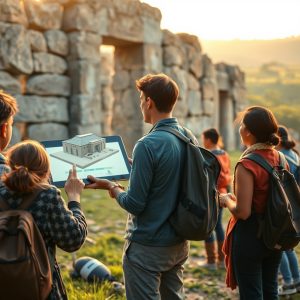
The Whispering Trails of Renewal: How Regenerative Travel and AI Are Crafting the Future of Immersive Cultural Heritage Tourism

There is a quiet revolution unfolding in the world of travel, one that transcends the mere act of visiting a place and instead seeks to leave it better than it was found. This is the essence of regenerative travel—a philosophy that goes beyond sustainability to actively restore, revitalize, and reconnect travelers with the cultural and ecological fabric of destinations. When paired with the precision of artificial intelligence and the depth of local storytelling, regenerative travel becomes a powerful force for preserving the soul of cultural heritage tourism.
The Philosophy of Regenerative Travel
Regenerative travel is not a new concept, but its application in cultural heritage tourism is where its true potential lies. Unlike traditional tourism, which often focuses on minimizing harm, regenerative travel aims to create a net positive impact. This means travelers are not just observers but active participants in the preservation and enrichment of the places they visit. Whether it’s restoring ancient ruins, reviving traditional crafts, or supporting local economies, regenerative travel turns every journey into an opportunity for renewal.
In destinations rich with history, such as the ancient cities of Morocco, the temples of Angkor Wat, or the indigenous communities of the Amazon, regenerative travel takes on a deeper meaning. Here, the goal is not just to protect these sites but to ensure their stories continue to thrive. This is where local storytelling becomes indispensable. Elders, artisans, and historians become the custodians of these narratives, passing down knowledge that might otherwise fade into obscurity. Their voices transform a simple visit into an immersive experience, one that resonates long after the journey ends.
The Role of AI in Crafting Immersive Experiences
Artificial intelligence is often seen as a tool of efficiency, but in the realm of regenerative cultural heritage tourism, it becomes a bridge between the past and the future. AI-powered platforms can analyze vast amounts of data to identify hidden patterns in cultural practices, predict the needs of local communities, and even simulate historical events through augmented reality. Imagine walking through the ruins of Pompeii and, with the help of AI, witnessing the city as it once was—bustling with life, color, and activity. Such experiences don’t just educate; they inspire a deeper connection to the place and its people.
AI also plays a crucial role in personalizing travel experiences. By understanding a traveler’s interests, AI can curate itineraries that align with regenerative principles. For instance, a visitor fascinated by traditional weaving might be connected with a local artisan in Oaxaca, Mexico, where they can learn the craft while contributing to its preservation. This level of customization ensures that every trip is meaningful, both for the traveler and the destination.
Local Storytelling: The Heartbeat of Cultural Heritage
No amount of technology can replace the authenticity of a story told by someone who has lived it. Local storytelling is the heartbeat of cultural heritage tourism, breathing life into historical sites and traditions. In Kyoto, Japan, geisha share tales of their craft, offering glimpses into a world that has remained unchanged for centuries. In the highlands of Peru, Quechua-speaking guides recount the legends of the Inca Empire, their words weaving a tapestry of history and myth. These stories are not just entertainment; they are a lifeline for cultural preservation.
When combined with regenerative travel, storytelling becomes a tool for empowerment. Travelers who engage with these narratives often leave with a sense of responsibility toward the places they’ve visited. They become advocates for the communities they’ve encountered, spreading awareness and supporting initiatives that ensure these stories endure. This ripple effect is what makes regenerative travel so transformative—it turns tourists into stewards of culture.
The Future of Cultural Heritage Tourism
The fusion of regenerative travel, AI, and local storytelling is redefining what it means to explore the world. It’s no longer about ticking off landmarks on a checklist but about forging connections that transcend time and geography. As travelers seek deeper, more meaningful experiences, destinations that embrace this approach will thrive. They will become living classrooms, where every visit contributes to the preservation of their cultural heritage.
Yet, the success of this movement hinges on collaboration. Governments, local communities, and travelers must work together to ensure that regenerative practices are not just a trend but a lasting shift in how we engage with the world. Technology can guide us, and stories can inspire us, but it is our collective commitment that will determine the future of cultural heritage tourism. The trails we walk today are not just paths through history—they are the foundation of a legacy we leave for generations to come.
The next time you set out on a journey, consider what it means to travel regeneratively. Seek out the stories that define a place, engage with the people who keep them alive, and let your visit be a force for renewal. In doing so, you won’t just discover a destination—you’ll become part of its story, a guardian of its heritage, and a steward of its future. The world is waiting, not just to be seen, but to be revived.