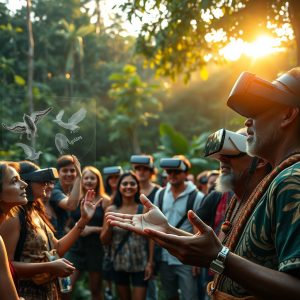
The Future of Smart Tourism: How AI and Local Insights Are Crafting Personalized Eco Experiential Journeys

In an era where technology and tradition intertwine, the travel industry is undergoing a profound transformation. The rise of smart tourism is not just about convenience—it’s about creating deeply personalized, eco-conscious experiences that resonate with the values of modern explorers. At the heart of this evolution lies the fusion of artificial intelligence and local storytelling, a dynamic duo that is redefining how we discover, engage with, and preserve the world’s hidden gems.
The Power of AI in Personalizing Travel
Artificial intelligence has become the silent curator of our journeys, analyzing vast amounts of data to tailor experiences that align with individual preferences, values, and even carbon footprints. From AI-powered travel planners that suggest off-the-beaten-path destinations to chatbots that provide real-time cultural insights, technology is making travel more intuitive and immersive than ever before. Imagine an algorithm that not only recommends a secluded eco-lodge in the heart of a rainforest but also connects you with a local guide who shares the untold stories of the land and its people. This is the promise of AI in smart tourism—turning every trip into a unique, meaningful adventure.
Platforms like Wanderlog and TripIt are already leveraging AI to help travelers craft itineraries that balance exploration with sustainability. These tools consider factors like transportation emissions, local economic impact, and even the seasonality of attractions to ensure that every journey leaves a positive footprint. For the eco-conscious traveler, this means no more guesswork—just seamless, responsible exploration.
Local Storytelling: The Soul of Immersive Travel
While AI provides the framework, it is local storytelling that breathes life into a destination. The most memorable travel experiences are not found in guidebooks or generic tours but in the narratives of the people who call a place home. Whether it’s a fisherman sharing the secrets of sustainable seafood in a coastal village or a historian recounting the legends of an ancient ruin, these stories create a deeper connection between travelers and the places they visit.
Initiatives like VoiceMap and Detour are pioneering this approach by offering GPS-triggered audio tours narrated by locals. These immersive experiences allow travelers to explore at their own pace while gaining insights that go beyond surface-level tourism. For example, a walking tour of Marrakech might reveal the hidden symbolism in the city’s architecture, or a food tour in Hanoi could uncover the history behind Vietnam’s beloved street dishes. By centering local voices, these platforms ensure that tourism becomes a force for cultural preservation rather than exploitation.
The Rise of Regenerative and Eco Experiential Tourism
Smart tourism is not just about personalization—it’s also about regeneration. The concept of regenerative travel goes beyond sustainability by actively contributing to the restoration of ecosystems, communities, and cultures. AI plays a crucial role here by identifying opportunities for travelers to engage in conservation efforts, support local businesses, or participate in community-led initiatives. For instance, an AI-driven app might suggest volunteering at a wildlife sanctuary in Costa Rica or staying at a farm-to-table eco-lodge in Portugal that practices regenerative agriculture.
Eco experiential tourism takes this a step further by blending adventure with education. Imagine kayaking through a mangrove forest while learning about its role in carbon sequestration, or hiking in the Andes with a guide who explains the traditional farming techniques that have sustained the region for centuries. These experiences are not just about seeing the world—they’re about understanding it and leaving it better than you found it.
Hidden Gems and the Art of Slow Travel
One of the most exciting aspects of smart tourism is its ability to uncover hidden gem destinations that might otherwise go unnoticed. AI algorithms can analyze travel patterns, social media trends, and local recommendations to highlight underrated locations that offer authentic, crowd-free experiences. For the slow traveler, this means trading rushed itineraries for immersive, unhurried exploration. Picture spending a week in a remote village in Japan, learning the art of indigo dyeing from a master craftsman, or wandering the cobblestone streets of a medieval European town without the usual tourist crowds.
Slow travel is not just a trend—it’s a mindset. It’s about savoring the journey as much as the destination, whether that means taking a scenic train ride through the Swiss Alps or spending an afternoon at a local café in Lisbon, watching the world go by. When combined with AI’s ability to personalize and local storytelling’s power to connect, slow travel becomes a transformative experience that fosters a deeper appreciation for the world’s diversity.
The Role of Technology in Preserving Cultural Heritage
Cultural heritage tourism is another area where smart tourism is making a significant impact. Virtual reality (VR) and augmented reality (AR) are being used to preserve and share cultural sites that are at risk of being lost to time or environmental degradation. For example, VR experiences can transport travelers to the ancient city of Palmyra in Syria, allowing them to explore its ruins as they once stood, while AR apps can overlay historical information onto real-world landmarks, bringing the past to life.
These technologies are not just about entertainment—they’re about education and preservation. By making cultural heritage accessible to a global audience, they inspire a sense of responsibility and stewardship. Travelers who engage with these immersive experiences are more likely to support conservation efforts and advocate for the protection of cultural sites in their own travels.
As we look to the future, the fusion of AI, local storytelling, and regenerative practices is set to redefine what it means to travel. No longer will tourism be a one-size-fits-all industry; instead, it will be a deeply personal, sustainable, and immersive experience that honors the planet and its people. The destinations we visit will no longer be mere backdrops to our adventures but active participants in a global movement toward mindful exploration. The question is no longer where we will go next, but how we will choose to experience it—and what legacy we will leave behind.