Forged in Fire and Faith: The Tenggerese People and the Eternal Flame of Mount Bromo
The mist-cloaked highlands of East Java cradle one of Indonesia’s most enigmatic cultures, where the sacred and the volcanic intertwine in a dance as old as time. The Tenggerese people, descendants of an ancient Hindu lineage, have thrived in the shadow of Mount Bromo for centuries, their lives shaped by the mountain’s fiery breath and the legends that bind them to its slopes. Their story is one of resilience, devotion, and an unbreakable covenant with the land they call home.
The Origins: A Love Story Etched in Fire
At the heart of Tenggerese identity lies the legend of Roro Anteng and Joko Seger, a tale as dramatic as the landscape that inspired it. According to folklore, Roro Anteng, the beautiful daughter of a powerful king, and Joko Seger, a humble but noble man, fell deeply in love. Their union, however, was forbidden by the king, who demanded an impossible dowry: a sea of sand and a bowl of fire. Undeterred, the couple sought the blessings of the gods, who guided them to the Tengger highlands. There, they fulfilled the king’s demands by creating a vast expanse of volcanic sand and harnessing the fire of Mount Bromo. Their love story became the foundation of the Tenggerese people, a community born from devotion and divine intervention.
This myth is more than a romantic fable; it is a cultural cornerstone. The Tenggerese trace their lineage to Roro Anteng and Joko Seger, and their descendants are said to have settled in the highlands, forging a life in harmony with the volatile forces of nature. The legend also explains the name “Tengger,” derived from the last syllables of the couple’s names, a constant reminder of their enduring legacy.
The Sacred Heart: Luhur Poten and the Tenggerese Faith
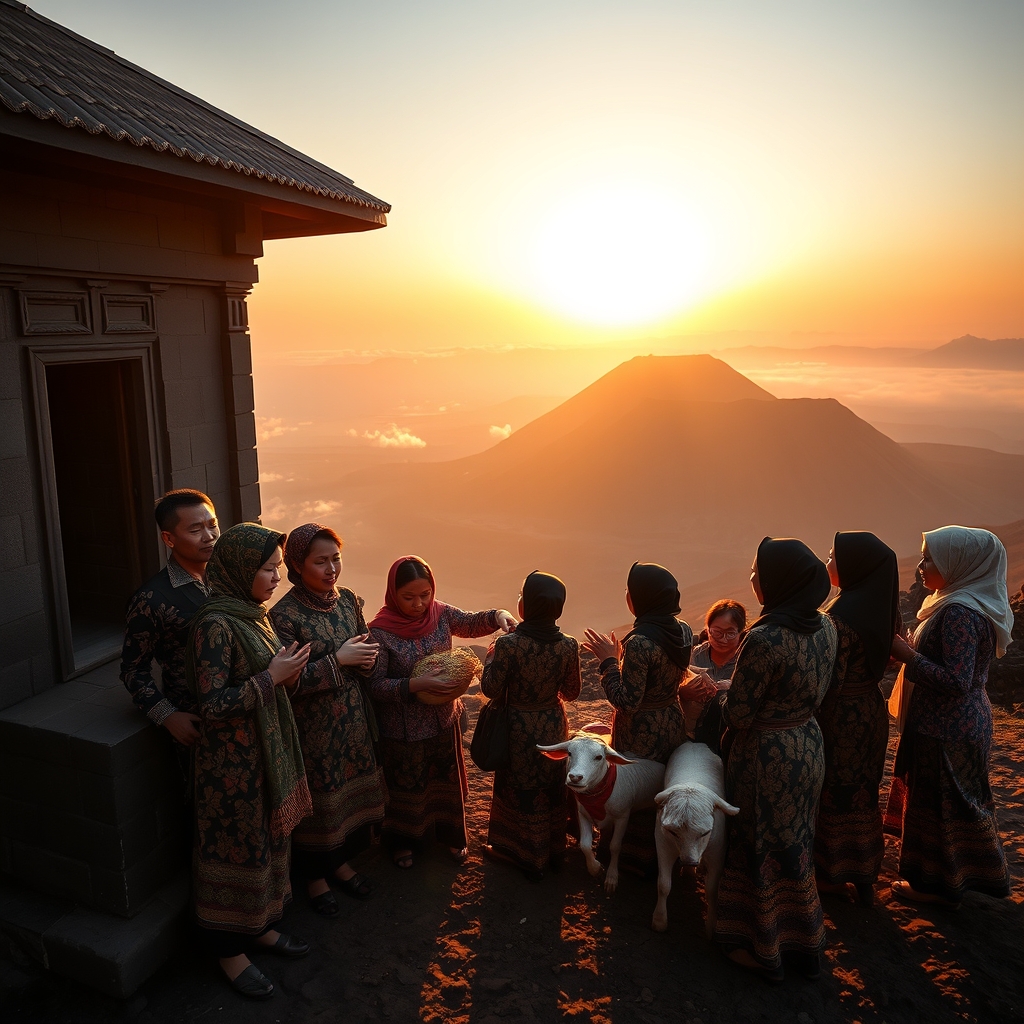
Nestled at the foot of Mount Bromo, the Luhur Poten Temple stands as the spiritual epicenter of the Tenggerese people. Unlike the grand, ornate temples of Bali, Luhur Poten is a humble yet profound structure, built from volcanic stone and designed to blend seamlessly with the stark beauty of its surroundings. The temple is not just a place of worship but a living testament to the Tenggerese’s syncretic faith, which blends Hinduism with animist traditions and reverence for the natural world.
The Tenggerese believe that Mount Bromo is a sacred entity, a gateway to the divine. Their rituals and ceremonies are deeply intertwined with the mountain’s cycles, from the annual Yadnya Kasada Festival to the daily offerings made by the community’s spiritual leaders, known as dukun. These priests, often regarded as intermediaries between the human and spiritual realms, play a crucial role in maintaining the balance between the Tenggerese and the forces that govern their world. Their prayers, chants, and offerings are acts of devotion, ensuring the mountain’s benevolence and the community’s prosperity.
The Dukun: Guardians of Tradition
The dukun are more than religious figures; they are the keepers of Tenggerese heritage. Trained from a young age, these priests undergo rigorous spiritual and physical preparation, learning the ancient rituals, medicinal practices, and oral histories that define their culture. Their knowledge is passed down through generations, a sacred trust that ensures the continuity of Tenggerese traditions. During ceremonies, the dukun don traditional attire, their voices rising in hypnotic chants as they invoke the blessings of the gods and the spirits of the mountain.
One of the most striking aspects of the dukun’s role is their connection to healing. In a community where modern medicine is often inaccessible, the dukun serve as healers, using herbs, prayers, and rituals to cure ailments. Their practices are a blend of science and spirituality, a testament to the Tenggerese’s deep understanding of the natural world and its rhythms.
The Yadnya Kasada Festival: A Night of Fire and Devotion
If there is one event that encapsulates the spirit of the Tenggerese, it is the Yadnya Kasada Festival. Held annually on the 14th day of the Kasada month in the Tenggerese calendar, this festival is a breathtaking spectacle of faith and sacrifice. The origins of Yadnya Kasada trace back to the legend of Roro Anteng and Joko Seger, who, after years of childlessness, were blessed with 25 children. The gods, however, demanded the sacrifice of their youngest son, Kesuma, to ensure the prosperity of their people. In a heart-wrenching act of devotion, the couple complied, and Kesuma’s spirit became one with Mount Bromo.
Today, the festival honors this sacrifice. As the full moon rises over the Tengger highlands, thousands of Tenggerese gather at Luhur Poten Temple to offer prayers and sacrifices. The air is thick with the scent of incense and the sound of traditional music, as families prepare offerings of rice, vegetables, livestock, and even money. These offerings are then cast into the crater of Mount Bromo, a symbolic gesture of gratitude and supplication. The sight of the offerings disappearing into the volcanic abyss is both awe-inspiring and humbling, a reminder of the delicate balance between human devotion and the raw power of nature.
A Living Culture in a Modern World
In an era of rapid globalization, the Tenggerese culture stands as a beacon of resilience. While the younger generation increasingly embraces modernity, the community remains steadfast in its commitment to preserving its heritage. Traditional rituals, such as the Yadnya Kasada Festival, continue to draw thousands of participants and tourists alike, offering a glimpse into a way of life that has endured for centuries. The Tenggerese have also found a delicate balance between tradition and progress, using cultural tourism as a means to sustain their economy while safeguarding their identity.
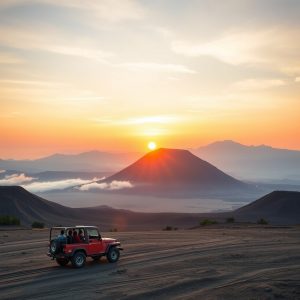
The allure of Mount Bromo extends far beyond its dramatic landscapes. For the Tenggerese, it is a sacred ancestor, a provider, and a constant reminder of their origins. The mountain’s eruptions, while destructive, are seen as part of a natural cycle, a testament to the ever-changing yet eternal bond between the Tenggerese and their homeland. As the sun rises over the Sea of Sand, casting a golden glow on the volcanic peaks, it illuminates not just a breathtaking vista but a culture that has thrived against all odds, forged in fire and faith.
The Tenggerese people do not merely inhabit the highlands of East Java; they are its guardians, its storytellers, and its living legacy. Their traditions, rituals, and legends are threads in a tapestry that weaves together the past and present, the human and the divine. In a world that often forgets the power of ancient wisdom, the Tenggerese remind us of the enduring strength of culture, community, and the unbreakable bonds that tie us to the land we call home.