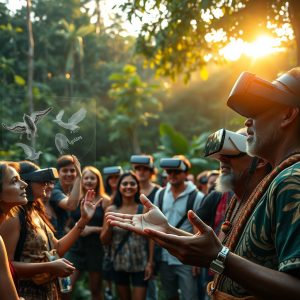
The Invisible Tapestry: How Local Storytelling and AI Are Weaving the Future of Regenerative Solo Travel

There is a quiet revolution unfolding in the way we explore the world, one that prioritizes depth over distance, connection over consumption, and regeneration over extraction. Solo travel, once seen as a solitary pursuit, is evolving into a powerful force for cultural preservation, environmental stewardship, and personal transformation. At the heart of this shift lies the fusion of two seemingly disparate elements: the timeless art of local storytelling and the cutting-edge precision of artificial intelligence. Together, they are crafting a new paradigm of travel—one that is as enriching for the traveler as it is restorative for the destinations they visit.
The Soul of Solo Travel: Beyond the Surface
Solo travel has long been romanticized as an act of self-discovery, a journey inward as much as outward. Yet, for all its introspective potential, it often risks becoming just another form of transient consumption—passing through places without truly engaging with them. The modern solo traveler, however, is seeking something deeper. They are no longer content with the curated highlights of guidebooks or the fleeting interactions of social media. Instead, they crave authenticity, a sense of belonging, and the opportunity to leave a positive imprint on the places they visit. This is where local storytelling becomes the bridge between the traveler and the destination.
Local storytellers—whether they are historians, artisans, farmers, or elders—hold the keys to a destination’s invisible tapestry. Their narratives are not just tales of the past; they are living threads that connect the land, its people, and its traditions. When a solo traveler sits with a weaver in a remote Andean village, listens to the songs of a fisherman on the coast of Kerala, or learns the medicinal secrets of a Maasai elder, they are not just observing a culture—they are becoming a part of it. These stories transform travel from a passive experience into an active exchange, one that fosters mutual respect and understanding.
The Role of AI: A Curator of Hidden Connections
While local storytelling provides the soul of regenerative solo travel, artificial intelligence is emerging as its unexpected ally. AI is not here to replace the human element of travel but to amplify it, acting as a curator of hidden connections that might otherwise go unnoticed. Through sophisticated algorithms, AI can analyze a traveler’s interests, values, and past experiences to suggest destinations, experiences, and storytellers that align with their unique journey. It can uncover the hidden gems that mass tourism overlooks—the family-run olive farm in Tuscany that practices regenerative agriculture, the indigenous-led eco-lodge in the Amazon that offers immersive cultural exchanges, or the coastal village in Portugal where locals still practice traditional boat-building techniques.
AI also plays a crucial role in ensuring that these experiences are sustainable. By tracking the environmental and social impact of travel choices, it can guide solo travelers toward options that support local economies, preserve cultural heritage, and minimize ecological footprints. For example, an AI-powered platform might recommend a homestay with a family that uses solar energy and serves locally sourced meals, or a guided hike led by a naturalist who educates visitors on the region’s biodiversity. In this way, AI becomes a tool for mindful exploration, helping travelers make choices that align with their values.
Regenerative Travel: Leaving Places Better Than You Found Them
The concept of regenerative travel takes sustainability a step further. While sustainable travel aims to minimize harm, regenerative travel seeks to actively restore and revitalize the destinations we visit. For solo travelers, this means engaging in experiences that contribute to the well-being of local communities and ecosystems. It could involve participating in a reforestation project in Costa Rica, learning traditional conservation techniques from indigenous communities in Australia, or supporting a women-led cooperative in Morocco that preserves ancient textile crafts.
Local storytelling is the thread that weaves these regenerative experiences together. When a traveler hears the story of a community’s struggle to protect its land from deforestation or the efforts of a village to revive its dying language, they are more likely to feel a personal connection to the cause. This emotional resonance transforms travel from a transactional experience into a transformative one, where the traveler becomes an active participant in the story of the place.
The Power of Slow: Savoring the Journey
In a world that often equates travel with speed and efficiency, slow travel offers a radical alternative. It encourages solo travelers to linger, to savor the moments between destinations, and to immerse themselves fully in the rhythm of a place. Slow travel is not about ticking off bucket-list items; it’s about cultivating a deeper understanding of the world and one’s place within it. It’s about sitting in a café in Istanbul for hours, watching the world go by, or spending a week in a rural Japanese village, learning the art of tea ceremony from a master.
AI can enhance the slow travel experience by helping travelers design itineraries that prioritize depth over breadth. Instead of cramming multiple cities into a week-long trip, an AI-powered planner might suggest spending the entire week in a single region, exploring its hidden corners and connecting with its people. It might recommend a series of storytelling sessions with local elders, a cooking class with a family that has farmed the land for generations, or a guided walk through a forest with a naturalist who can identify the medicinal plants used by indigenous healers. These experiences allow solo travelers to move beyond the role of observer and become co-creators of the narrative.
The Future of Solo Travel: A Tapestry of Stories and Technology
The future of solo travel lies in the delicate balance between tradition and innovation, between the timeless art of storytelling and the transformative potential of technology. As AI continues to evolve, it will become an even more powerful tool for connecting travelers with the stories that matter most—those that have the power to inspire, to educate, and to heal. Imagine an AI that can match a solo traveler with a storyteller whose life experiences resonate with their own, or one that can translate local dialects in real-time, allowing for deeper conversations and connections. The possibilities are endless, but the goal remains the same: to create travel experiences that are as meaningful for the traveler as they are beneficial for the destination.
Yet, for all the promise of technology, the true magic of solo travel will always lie in the human connections we forge along the way. It’s in the shared laughter over a meal, the quiet understanding between strangers, and the stories that linger long after the journey ends. As we move forward, the challenge will be to ensure that these connections remain at the heart of our travels, even as the tools we use to find them become more advanced. The invisible tapestry of local stories and regenerative practices is waiting to be discovered—all we need to do is slow down, listen, and let the journey unfold.