The Hidden Pulse of Destinations: How Solo Travel and Local Storytelling Are Crafting Authentic Immersive Journeys

There’s a quiet revolution unfolding in the way we explore the world—one that prioritizes depth over distance, connection over convenience, and stories over snapshots. At its heart lies the fusion of solo travel and local storytelling, two forces that are reshaping immersive tourism into an experience far richer than ticking off landmarks or collecting passport stamps. This isn’t just about seeing a place; it’s about feeling its pulse, understanding its rhythms, and becoming part of its narrative, even if only for a moment.
The Solo Traveler’s Advantage
Solo travel has long been celebrated for its freedom, but its true power lies in vulnerability. Without the buffer of companions, travelers are more open to serendipity—striking up conversations with strangers, wandering down unfamiliar alleys, or lingering in a café long enough to overhear the local gossip. This unscripted approach to exploration creates space for authentic interactions, the kind that guidebooks and group tours often miss. It’s in these moments that destinations reveal their hidden layers, from the elderly shopkeeper who remembers the neighborhood’s history to the street musician whose lyrics capture the soul of the city.
Technology has amplified this experience, with smart tourism tools like AI-driven itineraries and real-time translation apps breaking down barriers. Yet, the most memorable encounters often happen offline, in the quiet exchanges that technology can’t replicate. A solo traveler’s curiosity becomes a bridge, inviting locals to share their stories, traditions, and even their homes. These interactions don’t just enrich the journey; they redefine it, turning a trip into a dialogue between visitor and place.
The Power of Local Storytelling
Storytelling has always been the thread that weaves a community together, but in the context of travel, it transforms into a tool for immersion. Local storytellers—whether they’re historians, artisans, chefs, or simply lifelong residents—offer more than facts; they provide context, emotion, and a sense of belonging. A guided tour through a historic district becomes a living history lesson when led by someone whose ancestors walked those same streets. A cooking class isn’t just about recipes; it’s a lesson in cultural identity, passed down through generations.
This approach to tourism is inherently sustainable. When travelers engage with stories, they’re not just consuming a destination; they’re investing in it. They’re more likely to support local businesses, respect cultural norms, and leave with a deeper appreciation for the place. Storytelling also preserves intangible heritage, ensuring that traditions, dialects, and oral histories aren’t lost to globalization. In this way, immersive tourism becomes a force for regeneration, fostering pride in local communities and encouraging them to share their narratives with the world.
Hidden Gems and the Art of Slow Discovery
The rise of solo travel and local storytelling has also shifted the spotlight onto hidden gem destinations. These are the places that thrive on authenticity rather than mass appeal—villages where time moves slower, landscapes untouched by overtourism, and cultures preserved by those who call them home. Here, the pace of travel slows, allowing for deeper connections. A week spent in a rural homestay can reveal more about a culture than a month spent hopping between crowded cities.
Slow travel, a natural companion to solo exploration and storytelling, encourages travelers to linger, observe, and engage. It’s about savoring the journey as much as the destination, whether that means spending an afternoon in a family-run vineyard, learning traditional crafts from a local artisan, or simply sitting in a town square, watching life unfold. These experiences don’t just create memories; they create a sense of place, a feeling of having truly *been* somewhere rather than just *seen* it.
Technology as a Catalyst, Not a Replacement
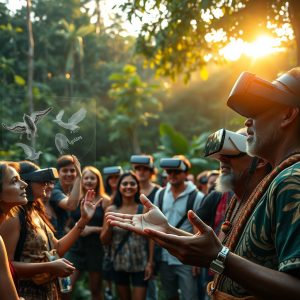
While technology has made travel more accessible, it’s the human element that makes it meaningful. AI travel planning can suggest off-the-beaten-path destinations, but it’s the local storyteller who brings them to life. Virtual reality can offer a glimpse into a far-flung culture, but it’s the solo traveler’s willingness to step into that world in person that turns a virtual experience into a real one. The future of immersive tourism lies in striking this balance—using technology to enhance, not replace, the human connections that make travel transformative.
Crafting Your Own Immersive Journey
For those drawn to this style of travel, the first step is simple: slow down. Resist the urge to fill every moment with activities and instead leave room for spontaneity. Seek out local storytellers—whether through community-led tours, homestays, or even chance encounters—and listen more than you speak. Choose accommodations that reflect the culture, like eco-friendly lodges or family-run guesthouses, where the line between host and guest blurs. And most importantly, approach each destination with curiosity and respect, recognizing that you’re not just a visitor, but a temporary participant in its story.
The most profound travel experiences aren’t measured in miles or monuments, but in the connections forged along the way. They’re found in the stories shared over a shared meal, the lessons learned from a local guide, or the quiet moments of reflection in a place that feels like home, even if it’s halfway across the world. In a time when the world can feel increasingly homogenized, solo travel and local storytelling offer a way to rediscover its diversity, one authentic encounter at a time. And perhaps, in the process, we rediscover something about ourselves—our capacity for wonder, our resilience, and our shared humanity.