Ashes, Ancestors, and Altars: The Living Traditions of the Tenggerese at Mount Bromo
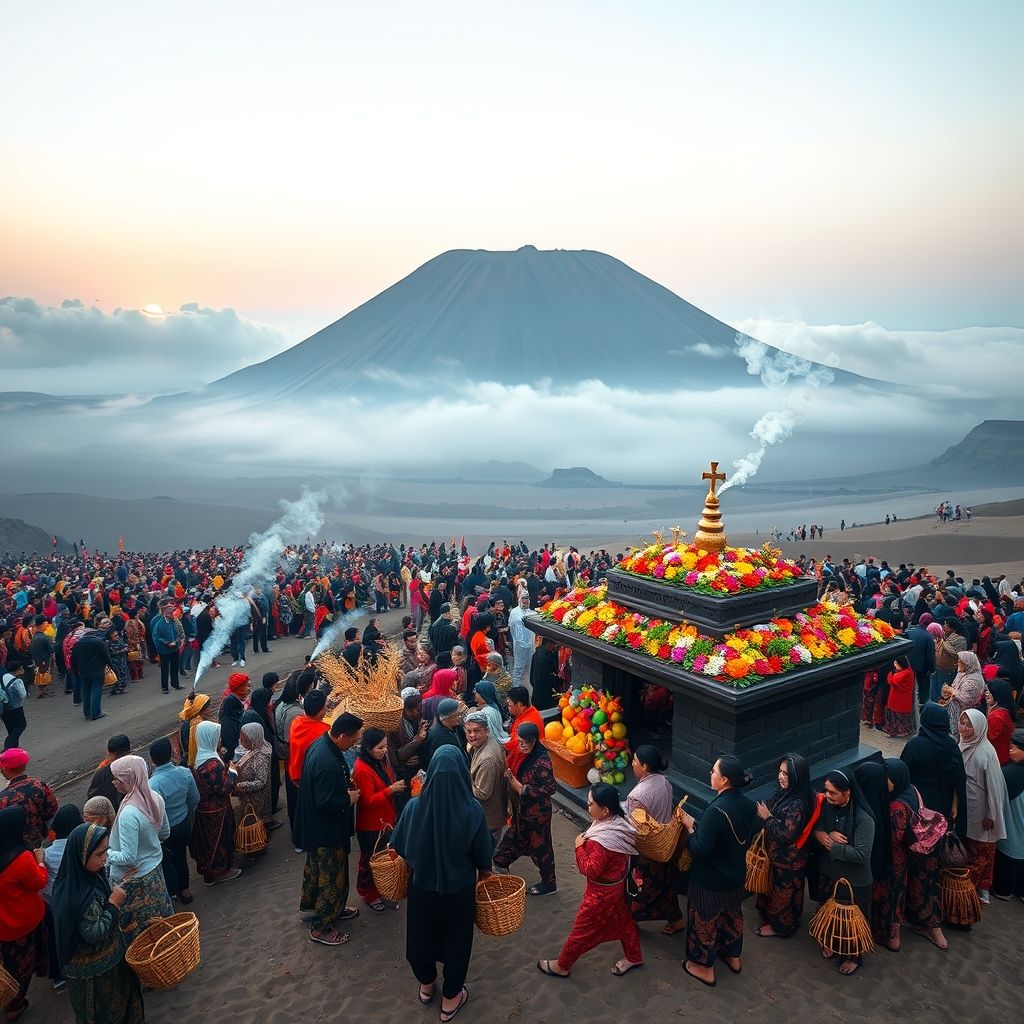
The mist curls around the jagged peaks of Mount Bromo like the breath of an ancient giant, whispering secrets of a people who have lived in its shadow for centuries. The Tenggerese, an indigenous community nestled in the highlands of East Java, are the keepers of a cultural legacy as enduring as the volcano itself. Their traditions, rituals, and folklore are woven into the very fabric of the landscape, creating a tapestry of faith, history, and resilience that continues to captivate the world.
The Origins: A Love Story Carved in Stone
At the heart of Tenggerese identity lies the legend of Roro Anteng and Joko Seger, a tale of love, sacrifice, and divine intervention. According to folklore, Roro Anteng, the daughter of a powerful king, and Joko Seger, a humble but noble man, fled their kingdom to escape war and persecution. They sought refuge in the fertile highlands of Mount Bromo, where they established a new community. The gods, moved by their devotion, blessed them with 25 children—but with a condition. Their youngest son, Kesuma, was to be sacrificed to the volcano to ensure the prosperity of their people.
The couple’s grief was profound, but they honored the divine decree. As Kesuma was cast into the crater of Mount Bromo, the volcano roared to life, and from its depths emerged a promise: the Tenggerese would be protected as long as they upheld their sacred rituals. This legend is not merely a story; it is the foundation of the Tenggerese worldview, a reminder of the covenant between the people and the mountain that sustains them.
The Sacred Heart: Luhur Poten Temple
Perched on the sea of sand that surrounds Mount Bromo, Luhur Poten Temple stands as a spiritual beacon for the Tenggerese. Unlike the grand, ornate temples of Bali, Luhur Poten is a humble structure, built from black volcanic stone and adorned with simple offerings of flowers, incense, and woven baskets. It is here that the Tenggerese gather for their most important ceremonies, seeking blessings from the gods and ancestors who dwell within the mountain.
The temple is not just a place of worship; it is a living testament to the Tenggerese’s syncretic faith, which blends elements of Hinduism with indigenous animist beliefs. The priests, known as dukun, serve as intermediaries between the physical and spiritual worlds, conducting rituals that honor the volcano’s power while seeking its protection. Their chants, offerings, and sacred dances are a bridge to the past, a way of keeping the traditions of their ancestors alive in the modern world.
The Yadnya Kasada Festival: A Night of Fire and Faith
Every year, on the 14th day of the Kasada month in the Tenggerese calendar, the Yadnya Kasada Festival transforms the slopes of Mount Bromo into a spectacle of devotion. The festival, which typically falls in June or July, is the most important event in the Tenggerese calendar, a time when the community comes together to honor the gods and renew their sacred vow.
The night before the festival, the Tenggerese gather at Luhur Poten Temple for prayers and offerings. As dawn breaks, they begin their pilgrimage to the crater’s edge, carrying baskets filled with rice, fruits, vegetables, livestock, and even money. These offerings are thrown into the volcano as a symbol of gratitude and a plea for continued protection. The sight of thousands of people climbing the steep slopes, their voices rising in unison, is a powerful reminder of the enduring bond between the Tenggerese and their sacred mountain.
The festival is not without its dangers. The crater’s edge is treacherous, and the volcano’s temper unpredictable. Yet, the Tenggerese approach the ritual with unwavering faith, believing that the gods will guide their steps and accept their offerings. For outsiders, the Yadnya Kasada Festival is a mesmerizing glimpse into a world where myth and reality intertwine, where the past is not just remembered but actively lived.
Guardians of Tradition: The Role of the Dukun
In a rapidly changing world, the dukun of the Tenggerese community are the custodians of an ancient legacy. These spiritual leaders, often hereditary, undergo years of training to master the rituals, chants, and herbal remedies that define Tenggerese culture. They are healers, mediators, and storytellers, preserving the knowledge passed down through generations.
The dukun play a central role in the Yadnya Kasada Festival, leading the prayers and ensuring that the offerings are made according to tradition. Their presence is a reassuring constant in a community that has seen its share of challenges, from volcanic eruptions to the encroachment of modernity. Yet, despite these pressures, the dukun remain steadfast, their voices echoing through the highlands like the wind through the pines.
The Eruptions of History: Mount Bromo’s Fiery Legacy
Mount Bromo is not just a sacred symbol; it is an active volcano, its history marked by eruptions that have shaped the landscape and the lives of the Tenggerese. The most devastating eruption in recent memory occurred in 2010, when the volcano spewed ash and smoke into the sky, disrupting air travel and forcing evacuations. Yet, even in the face of such destruction, the Tenggerese remained resilient, their faith unshaken.
Historical records suggest that Mount Bromo has been active for centuries, with eruptions documented as far back as the 19th century. Each eruption is seen as a reminder of the volcano’s power, a force that must be respected and appeased. The Tenggerese believe that the mountain’s wrath is a sign of the gods’ displeasure, a call to renew their devotion through rituals and offerings. In this way, the volcano is not just a geological phenomenon but a living entity, a participant in the ongoing story of the Tenggerese people.
Cultural Tourism: Bridging the Past and Present
In recent years, Mount Bromo has become a popular destination for cultural tourism, drawing visitors from around the world who are eager to witness the Yadnya Kasada Festival and explore the unique traditions of the Tenggerese. While tourism has brought economic benefits to the community, it has also posed challenges, as the influx of outsiders threatens to dilute the authenticity of Tenggerese culture.
Yet, the Tenggerese have found ways to adapt, using tourism as an opportunity to share their heritage while preserving its integrity. Local guides, many of whom are members of the community, offer insights into the history and significance of the rituals, ensuring that visitors leave with a deeper understanding of the Tenggerese way of life. Meanwhile, initiatives to promote sustainable tourism aim to protect the environment and support the local economy, ensuring that the cultural legacy of Mount Bromo endures for generations to come.
The highlands of Mount Bromo are more than just a landscape; they are a living museum of faith, resilience, and tradition. The Tenggerese, with their deep connection to the land and their unwavering devotion to their ancestors, offer a powerful reminder of the ways in which culture can endure, even in the face of change. Their story is not just one of survival but of thriving, a testament to the enduring power of belief and the unbreakable bond between a people and their sacred mountain.