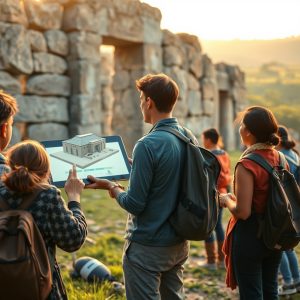
The Rise of AI Travel Planning: How Smart Tourism is Personalizing Hidden Gem Destinations for the Conscious Explorer

In an era where travel is no longer just about ticking off bucket-list landmarks, a new wave of explorers is seeking deeper, more meaningful connections with the places they visit. The rise of AI travel planning is revolutionizing how we discover the world, blending cutting-edge technology with the principles of slow travel and sustainable tourism. No longer confined to generic itineraries, modern travelers are leveraging artificial intelligence to uncover hidden gem destinations that align with their values—whether that means supporting local communities, minimizing environmental impact, or immersing themselves in authentic cultural experiences.
The Shift from Mass Tourism to Personalized Exploration
For decades, travel was dominated by mass tourism—crowded hotspots, overpriced souvenirs, and experiences designed for the lowest common denominator. But as awareness of overtourism and its environmental and social consequences grows, travelers are increasingly seeking alternatives. Enter smart tourism, a movement that uses technology to create more thoughtful, personalized, and sustainable journeys. At the heart of this shift is AI, which analyzes vast amounts of data—from local weather patterns to cultural events—to craft itineraries that feel uniquely tailored to the individual.
Imagine an algorithm that doesn’t just suggest the fastest route to the Eiffel Tower but instead recommends a lesser-known village in Provence where you can participate in a local storytelling tour, learn traditional bread-making from a fourth-generation baker, or stay in an eco-friendly accommodation powered entirely by renewable energy. AI doesn’t just optimize for convenience; it optimizes for connection, ensuring that every recommendation supports the local economy and preserves the destination’s authenticity.
How AI is Unlocking Hidden Gems
The true power of AI in travel lies in its ability to surface destinations and experiences that even the most well-researched guidebooks might overlook. By processing real-time data—such as social media trends, local event calendars, and even satellite imagery—AI can identify emerging hidden gem destinations before they become mainstream. For example, an AI-powered travel assistant might notice a surge in interest in a remote mountain village known for its regenerative agriculture practices and suggest it as a stop on a culinary tourism itinerary, complete with farm-to-table dining experiences and hands-on workshops.
Moreover, AI can adapt recommendations based on a traveler’s evolving preferences. If a digital nomad expresses interest in wellness tourism, the system might suggest a secluded glamping retreat in the Scottish Highlands, where they can work remotely during the day and unwind with forest bathing sessions in the evening. For the solo traveler seeking adventure, AI could highlight a community-led kayaking expedition in Patagonia, where the focus is on regenerative travel—giving back to the environment through conservation efforts while exploring its breathtaking landscapes.
The Role of Local Storytelling in AI-Curated Journeys
One of the most exciting ways AI is enhancing travel is by integrating local storytelling into the planning process. Traditional travel guides often present a sanitized, tourist-friendly version of a destination’s history and culture. AI, however, can connect travelers with the raw, unfiltered narratives of local communities—whether through augmented reality tours that overlay historical events onto present-day streets or audio guides narrated by indigenous storytellers.
For instance, an AI travel planner might recommend a walking tour in Lisbon led by a descendant of the city’s Jewish community, offering insights into the neighborhood’s rich but often overlooked heritage. Or it could suggest a visit to a rural Japanese town where a local artisan demonstrates the centuries-old craft of indigo dyeing, sharing personal anecdotes that bring the tradition to life. These experiences don’t just educate; they foster empathy and a deeper appreciation for the places we visit.
The Future of Smart Tourism: Balancing Technology and Human Connection
While AI is undeniably transforming the way we travel, its greatest potential lies in its ability to enhance—not replace—human connection. The most memorable travel experiences are often the unplanned ones: striking up a conversation with a local shopkeeper, stumbling upon a street festival, or getting lost in a labyrinth of cobblestone alleys. AI can set the stage for these moments by removing the friction of logistics, but it’s up to the traveler to embrace the spontaneity and openness that make exploration truly rewarding.
As smart tourism continues to evolve, we’re likely to see even more innovative applications of AI, from virtual reality previews of destinations to real-time translation tools that break down language barriers. But no matter how advanced the technology becomes, the core of travel will always be about connection—whether with a place, its people, or even ourselves. The rise of AI travel planning isn’t just about making trips more efficient; it’s about making them more meaningful, ensuring that every journey leaves a positive impact on both the traveler and the world they explore.
The next time you plan a trip, consider letting AI guide you off the beaten path. You might just discover that the most extraordinary experiences are the ones you never knew you were looking for.