Guardians of the Sacred Peak: The Tenggerese and Their Timeless Covenant with Mount Bromo
The mist-cloaked highlands of East Java cradle one of Indonesia’s most enigmatic cultures—the Tenggerese people. Nestled in the shadow of Mount Bromo, an active volcano that rises like a sentinel from the Sea of Sand, this indigenous community has preserved a way of life that intertwines deep spirituality, ancient rituals, and an unbreakable bond with the land. Their story is not merely one of survival but of reverence, a testament to how tradition can thrive even in the face of modernity’s relentless march.
The Origins: A Legacy Forged in Myth and Fire
The origins of the Tenggerese are steeped in legend, a tapestry woven from the threads of Hindu-Javanese mythology and the raw power of nature. According to local lore, the tribe descends from Roro Anteng, a princess of the Majapahit Empire, and her husband, Joko Seger. As the story goes, the couple fled the collapse of their kingdom, seeking refuge in the isolated highlands. There, they established a new dynasty, their descendants forming the Tenggerese community—a name derived from the last syllables of their names: *Teng* from Anteng and *Ger* from Seger.
This myth is more than a romantic tale; it is a foundational narrative that explains the Tenggerese’s unique blend of Hinduism, distinct from the Islam-dominated lowlands of Java. Unlike the Balinese, whose Hinduism is deeply influenced by Indian traditions, the Tenggerese practice a form of religion that predates the Majapahit era, infused with animist beliefs and a profound connection to the spirits of the mountains, forests, and volcanoes.
The Sacred Heart: Luhur Poten and the Soul of Tenggerese Faith
At the heart of Tenggerese spirituality lies Luhur Poten, a sacred temple nestled on the edge of Mount Bromo’s caldera. Unlike the ornate, multi-tiered temples of Bali, Luhur Poten is a humble structure, its simplicity a reflection of the Tenggerese’s unadorned devotion. Built from volcanic stone, the temple serves as the epicenter of their religious life, where priests known as *dukun* or *resi* conduct rituals that have been passed down through generations.
The temple is not merely a place of worship but a living entity, a bridge between the physical and spiritual worlds. During major ceremonies, the air hums with the sound of gamelan music, the scent of incense, and the murmurs of prayers offered to the gods and ancestors. The Tenggerese believe that Mount Bromo is the abode of *Hyang Widi Wasa*, the supreme deity, and that the volcano’s eruptions are expressions of divine will—a reminder of nature’s omnipotence and the need for harmony between humans and the cosmos.
The Dukun: Keepers of Ancient Wisdom
Central to the Tenggerese’s spiritual life are the *dukun*, revered priests who serve as intermediaries between the community and the divine. These figures are not just religious leaders but also healers, storytellers, and custodians of oral traditions. Their knowledge encompasses herbal medicine, astrology, and the intricate rituals that govern Tenggerese life, from birth to death and beyond.
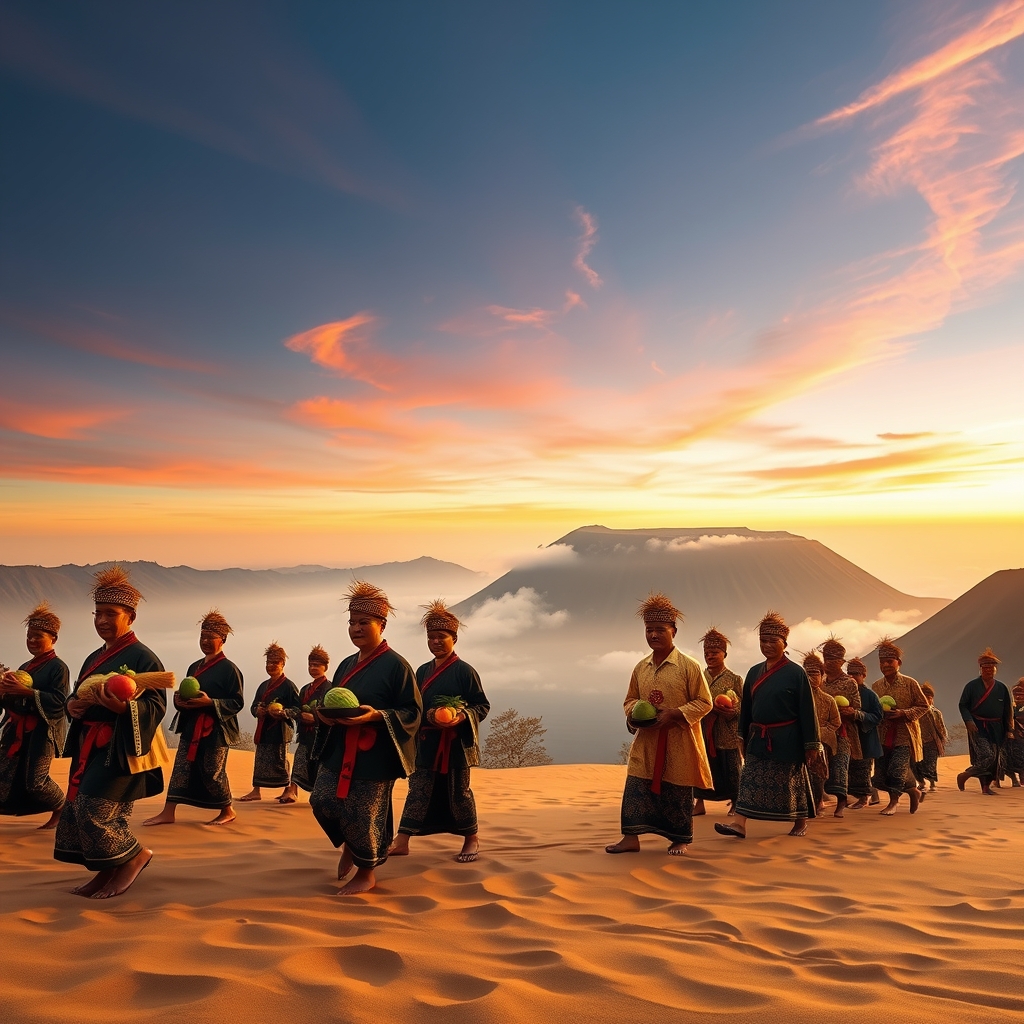
A *dukun*’s role is hereditary, though not exclusively so; some are chosen by signs or visions, their calling marked by an innate connection to the spiritual realm. During ceremonies, they don the traditional *iket* headband and *kain batik*, their voices rising in chants that echo across the highlands. Their presence is a living link to the past, a reminder that the Tenggerese’s identity is inseparable from their faith.
Yadnya Kasada: The Festival of Fire and Faith
No exploration of Tenggerese culture would be complete without delving into the Yadnya Kasada Festival, a breathtaking spectacle that draws thousands of pilgrims and tourists each year. Held on the 14th day of the Kasada month in the Tenggerese calendar (typically falling in June or July), the festival is a grand offering ceremony to appease the gods and seek their blessings for prosperity and protection.
The origins of Yadnya Kasada trace back to the legend of Roro Anteng and Joko Seger. Desperate for an heir, the couple prayed to the gods, who granted them 24 children on the condition that their youngest, Kesuma, be sacrificed to the volcano. Reluctantly, they fulfilled their vow, casting Kesuma into the crater of Mount Bromo. From that day forward, the Tenggerese have honored this sacrifice by throwing offerings—fruits, vegetables, livestock, and even money—into the volcano’s mouth during the festival.
The ritual begins at midnight, as the *dukun* leads a procession from Luhur Poten to the edge of the crater. The air is thick with the smoke of incense and the sound of prayers, while the glow of torches illuminates the faces of the faithful. As dawn breaks, the offerings are hurled into the abyss, a dramatic act of devotion that symbolizes the Tenggerese’s surrender to the divine will. For the community, Yadnya Kasada is not just a tradition; it is a reaffirmation of their covenant with the gods, a promise to uphold the values of their ancestors.
The Sea of Sand: A Landscape of Legends
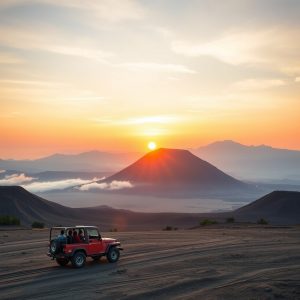
The Tengger Highlands are a realm of stark beauty, where the Sea of Sand—a vast, undulating expanse of volcanic ash—stretches like a lunar landscape beneath the towering peaks of Mount Bromo and Mount Batok. This otherworldly terrain is more than a geological wonder; it is a sacred space, imbued with the spirits of the land. The Tenggerese believe that the Sea of Sand is the domain of *Dewa Brahma*, the god of fire, and that its shifting sands are a manifestation of his power.
For centuries, the Tenggerese have traversed this barren yet fertile land, their lives dictated by the rhythms of the volcano. The soil, enriched by volcanic ash, yields bountiful harvests of potatoes, cabbages, and carrots, while the highlands’ cool climate provides a stark contrast to the tropical heat of the lowlands. Yet, life here is not without its challenges. The ever-present threat of eruptions serves as a constant reminder of nature’s unpredictability, a force that the Tenggerese respect and revere in equal measure.
Preserving a Cultural Tapestry in the Modern World
In an era where globalization threatens to erode indigenous cultures, the Tenggerese stand as a beacon of resilience. Their traditions, though tested by time and change, remain vibrant, a testament to their unwavering commitment to their heritage. Tourism, while bringing economic opportunities, also poses challenges, as the influx of visitors risks commodifying their sacred rituals. Yet, the Tenggerese have found ways to adapt, welcoming outsiders with warmth while safeguarding the sanctity of their customs.
Efforts to preserve Tenggerese culture extend beyond the community itself. Scholars, anthropologists, and cultural organizations have documented their rituals, languages, and oral histories, ensuring that their legacy endures for future generations. The Indonesian government, too, has recognized the importance of the Tenggerese, designating Mount Bromo as a national park and a site of cultural significance. These initiatives, though not without their complexities, offer hope that the Tenggerese’s way of life will continue to thrive.
The story of the Tenggerese is a reminder that culture is not static; it is a living, breathing entity that evolves even as it clings to its roots. Theirs is a tale of faith, resilience, and an unshakable bond with the land—a bond that has withstood the test of time, erupting like the fires of Mount Bromo in moments of profound beauty and devotion. In the heart of the highlands, where the mist meets the sky, the Tenggerese continue to dance with the gods, their voices echoing across the Sea of Sand, a hymn to the enduring power of tradition.